
Introduction to VA Disability Pay

VA disability pay serves as a critical financial resource for veterans who have experienced service-related injuries or disabilities. This form of compensation is administered by the U.S. Department of Veterans Affairs (VA) and is designed to support veterans in their transition to civilian life. Understanding this benefit is essential for veterans wishing to receive financial assistance, as it can help mitigate the economic challenges that may arise following their military service.
New 2026 Housing & Disability Increases
See if your monthly benefit qualifies for an update.
Eligibility for VA disability benefits generally extends to veterans who can demonstrate that their disability was incurred or aggravated during active service. The assessment of eligibility relies on thorough documentation, including medical records and service-related information, which confirms the connection between military duties and the stated disabilities. This can include both physical and mental health conditions that affect overall well-being and the ability to maintain employment.

The importance of these benefits cannot be overstated, as they provide necessary support to veterans and their families. VA disability pay not only addresses immediate financial needs but also helps promote long-term stability by enabling veterans to focus on recovery and reintegration into civilian life. Additionally, the compensation can often be used to cover medical expenses, housing costs, and other essential living expenses, thereby easing the transition process.
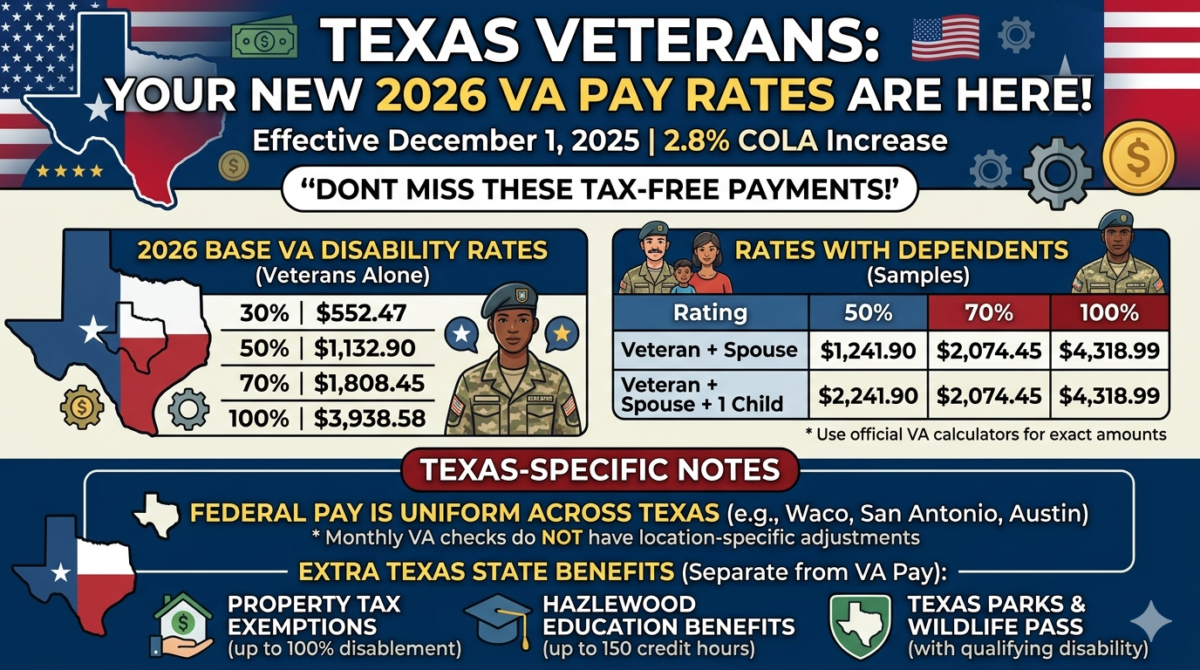
Veterans residing in Waco, Texas, should pay particular attention to the VA disability pay chart to understand their potential entitlements for 2026. The chart outlines the various disability compensation levels based on the severity of the disabilities, ensuring veterans are informed about their rights and benefits. The VA remains committed to supporting veterans through these financial programs, helping them gain access to a range of resources and services that can enhance their quality of life.
Understanding the VA Disability Pay Chart
The VA disability pay chart serves as an essential reference for veterans seeking to understand their potential compensation based on their specific disability ratings. When veterans apply for disability benefits, the Department of Veterans Affairs (VA) assigns a disability rating, typically ranging from 0% to 100%. This rating reflects the severity of the service-connected condition and directly affects the monthly benefits received.

Each disability rating correlates with a specific payment amount, which is detailed in the VA disability pay chart. For instance, a veteran rated at 10% may receive lower compensation than a veteran rated at 100%. The monthly payments vary annually, and the 2026 pay chart reflects changes that may occur due to inflation adjustments or policy revisions. Understanding these values is crucial for veterans and their families in Texas, particularly in cities like Waco, where veteran services may differ based on local availability.
Moreover, the amount that veterans receive may also be influenced by their dependent status. For instance, additional allowances are available for veterans with dependents, which can lead to increased overall compensation. This is particularly important for veterans supporting a family, as the additional financial support can play a significant role in their household’s financial stability.

Other elements, such as special monthly compensation for specific needs like aid and attendance, need to be taken into account as well. Therefore, it is imperative for veterans to familiarize themselves with the intricacies of the VA disability pay chart. This knowledge can ensure they are receiving the correct compensation and can also assist in planning for future financial requirements.
Disability Rates for 2026
For the year 2026, the Department of Veterans Affairs (VA) has announced updated disability compensation rates that reflect necessary adjustments based on inflation and other economic factors. The new rates are designed to support veterans who have incurred service-related disabilities, ensuring they receive adequate financial assistance for their needs. The upcoming rates vary depending on the severity of the disability, measured in percentage increments from 0 to 100.
As a comparison to 2025, the base compensation for a veteran rated at 100% disability is set to increase from approximately $3,400 to $3,500 per month. This adjustment not only helps veterans cope with changes in living costs but also reflects the VA’s commitment to addressing their ongoing economic challenges. Lower disability percentages will also see incremental increases, which further stresses the importance of a structured compensation framework.
For example, a 90% disability rating may see monthly compensation raised from around $2,800 to $2,900, while those rated at 70% will observe an increase from roughly $1,900 to $2,000. These changes are indicative of the VA’s recognition of the need to ensure that veterans receive fair compensation for their service-related injuries and conditions. Comparisons reveal a gradual and consistent growth in compensation rates over the past few years, suggesting a trend towards enhanced support for veterans. The VA continuously reviews these rates, striving to keep pace with economic challenges facing veterans today. While specific numbers can vary yearly due to inflation adjustments, the overall trend is encouraging for veterans in Waco and throughout Texas.
Factors Affecting Disability Pay in Texas
There are various factors that contribute to the calculation of disability pay for veterans residing in Texas. One of the most prominent considerations is the local cost of living, which can vary significantly from one region to another. Waco, for example, has a different cost breakdown compared to larger cities like Dallas or Houston. These regional differences may influence the overall benefits veterans receive, as various scales and adjustments are often associated with the living standards in these areas. Thus, veterans in Waco should understand how the local economy’s conditions could potentially affect their disability compensation.
Another crucial aspect that impacts disability pay involves taxation policies within Texas. One notable advantage is that Texas does not impose a state income tax, which can be particularly beneficial for veterans receiving VA disability compensation. This exemption allows veterans to retain more of their monthly payments compared to states with higher tax rates. Simplified financial planning becomes achievable as a result, enabling veterans to allocate their resources more effectively without the burden of state taxation on their income.
Moreover, Texas provides certain state-specific benefits for veterans that can augment their disability payments. For instance, veterans may access educational benefits or property tax exemptions that are exclusive to military service members. These advantages can play a pivotal role in enhancing the financial landscape for veterans living in Texas, thereby allowing them to utilize their benefits more comprehensively.
Incorporating these factors together underscores the complexity surrounding the VA disability pay in Texas. Veterans are encouraged to remain informed about local adjustments, taxation implications, and state-specific benefits, as this information is vital in maximizing their disability compensation.
Changes and Revisions in 2026 Compensation
The Veterans Affairs (VA) compensation structure is subject to ongoing changes to better serve veterans in Texas and across the United States. As we look ahead to 2026, various anticipated changes are expected to affect the compensation that veterans, particularly those in Waco, may receive. Understanding these potential modifications is crucial for veterans and their families as they navigate the benefits system.
One significant change that may come into effect in 2026 is the adjustment to the compensation rates based on the Consumer Price Index (CPI). The annual assessment of the CPI ensures that veterans’ benefits align with inflation rates, thereby maintaining the purchasing power of their compensation over time. This means that while the exact figures for 2026 are not finalized, veterans can expect increases in their monthly benefits, contingent upon observed inflation trends.
Another area of potential revision pertains to the eligibility criteria for certain disabilities and conditions. The VA continually reviews scientific research and veteran feedback to refine its regulations and benefit offerings. Consequently, some conditions currently recognized as service-related may be reevaluated, possibly expanding or restricting eligibility for compensation. This change could have a wide-reaching impact on veterans’ access to financial support depending on their specific circumstances.
Furthermore, technological advancements in the assessment and adjudication processes are anticipated to streamline claims processing. Early indications from the VA reveal that by adopting more efficient digital platforms, veterans may experience quicker responses to their compensation claims. Enhanced access to information and resources is also expected to assist veterans in understanding their rights and navigating the benefits system seamlessly.
In summary, the anticipated changes and revisions in the 2026 VA compensation structure are pivotal for veterans in Waco and beyond. Staying informed about these developments can empower veterans to make well-informed decisions regarding their benefits and navigate any new regulations effectively.
How to Apply for VA Disability Benefits
Applying for VA disability benefits is a crucial step for veterans seeking to receive financial assistance for injuries or illnesses incurred during service. For veterans in Waco, Texas, the process can be straightforward if approached methodically. Below are the key steps involved in applying for these vital benefits.
First, veterans should gather all necessary documentation that supports their claim. Essential documents include service records, medical records that detail the conditions affecting the veteran, and any treatment history. This information is critical as it helps establish the connection between military service and the disability. Veterans may also need to collect statements from family members or fellow service members who can attest to the impact of their disability.
The next step involves submitting the claim. Veterans in Waco can file their application online through the VA’s official website, via mail, or in person at the nearest VA regional office. Online submissions tend to streamline the process, ensuring a quicker response. It is advisable to utilize the VA’s eBenefits platform, which allows veterans to track their application status conveniently.
Completing the application form accurately is vital. Veterans should ensure that they answer all questions truthfully and provide detailed descriptions of their disabilities. Missing information could lead to delays or denials. Once the application is submitted, the VA may schedule a Compensation & Pension (C&P) exam to further evaluate the claimed conditions.
Throughout this application process, veterans in Waco are encouraged to seek assistance from local veteran service organizations. These organizations can provide guidance and resources to help navigate the intricate application system. Additionally, ensuring that all forms are complete and submitted on time will help facilitate a smoother experience.
Resources Available for Veterans in Waco
Waco, Texas is home to various essential resources tailored specifically for veterans, offering a support network across different areas, including healthcare, financial planning, and community engagement. Understanding these resources can significantly enhance the quality of life for veterans residing in the region.
One notable organization is the Waco Veterans Affairs Clinic, part of the VA health system. This facility provides critical healthcare services ranging from general medical care to specialized treatment for conditions often faced by veterans. Access to mental health support, as well as physical health assessments, plays a vital role in ensuring that veterans receive timely and comprehensive care.
Additionally, veterans can benefit from the Veterans of Foreign Wars (VFW) Post in Waco, known for its active community involvement and camaraderie. This organization not only serves as a social club but also as an advocacy group for veterans’ rights and services. Members have access to various programs, including scholarship opportunities and community events aimed at fostering relationships among veterans and their families.
Financial consultation services are also pivotal for veterans transitioning to civilian life. The Texas Veterans Commission offers assistance with navigating benefits, securing employment, and understanding the VA disability pay structure. Their experienced staff can provide personalized advice on how to utilize available resources effectively, which can be particularly beneficial as veterans assess their needs under the VA Disability Pay Chart for 2026.
In addition, various local non-profit organizations provide outreach programs that assist veterans in Waco with housing assistance and legal advocacy, ensuring that veterans have access to the support necessary for a smooth transition back into civilian life.
Personal Stories and Testimonials from Waco Veterans
The journey to obtaining disability benefits can often be daunting, as many veterans in Waco have come to understand. Their personal stories serve as powerful reminders of both the challenges they face and the triumphs they achieve. Take, for instance, the account of Richard, a Vietnam War veteran. After returning home, Richard struggled with PTSD and chronic pain, which hindered his ability to reintegrate into civilian life. He shared, “Navigating the VA system initially felt like an uphill battle, but with guidance from fellow veterans and community organizations, I finally got the help I needed.” Richard’s experience underscores the importance of peer support in the disability claims process.
Another notable story is that of Maria, an Iraq War veteran, who found herself frustrated when her claim for disability was initially denied. “I felt defeated, but I decided to reach out to a local veterans’ service organization,” Maria recounted. With the right assistance, she meticulously gathered the necessary documentation and was eventually approved. Her enduring resilience highlights the critical role of local resources in empowering veterans to navigate the application process and secure the benefits they deserve.
Veterans in Waco also emphasize the need for firsthand experiences to guide newcomers through the complexities of the benefits system. John, a veteran from the Gulf War era shared, “The best advice I received was to connect with others in my situation. Their insights placed my struggles in perspective and provided practical steps I could take.” These testimonials reflect a collective sentiment: that beyond the bureaucratic processes, human connections can illuminate the path toward successful claims.
In sharing these personal anecdotes, veterans in Waco not only provide hope but also foster a sense of community. Through their stories, they remind others that while the journey may be challenging, it is one that many have successfully navigated, offering invaluable lessons along the way.
Conclusion and Future Outlook on VA Disability Benefits
In summary, understanding the VA disability pay chart for 2026 is crucial for veterans, particularly for those residing in Waco, Texas. This blog post has highlighted the key benefits available, as well as how factors such as disability ratings and eligibility criteria influence the compensation veterans may receive. The VA’s commitment to providing ongoing support is evident through the adjustments in benefits that reflect current economic conditions and veterans’ needs.
As we look to the future, it is essential for veterans to stay informed about legislative changes and new policies that may impact their benefits. The landscape of VA disability payments continues to evolve, with discussions surrounding enhancements to the existing systems aiming to further assist those who have served. With a growing emphasis on mental health care and additional resources, there is reason for optimism regarding the enhancement of benefits.
Veterans are encouraged to actively engage with local VA offices and veteran support organizations to ensure they receive accurate information and personalized assistance. By fostering a proactive approach, individuals can stay ahead of any changes to their benefits and effectively advocate for their needs. Ultimately, the VA’s evolving commitment to supporting our nation’s veterans reflects a broader recognition of their sacrifices and the importance of providing ongoing assistance throughout their lives.
In conclusion, by comprehending the VA disability pay chart and remaining vigilant about potential updates, veterans in Waco can optimize their benefits and maintain a strong support system throughout their journey.