
Introduction to VA Disability Compensation

VA disability compensation is a vital financial support program offered by the U.S. Department of Veterans Affairs (VA) to service members who experience disabilities as a result of their military service. This assistance aims to ensure that veterans receive the necessary compensation for the impacts these disabilities have on their lives. In Texas, particularly in cities like Waco, El Paso, and San Antonio, this program plays an essential role in supporting the health and well-being of veterans and their families.
New 2026 Housing & Disability Increases
See if your monthly benefit qualifies for an update.
Eligibility for VA disability compensation is generally based on providing medical evidence that a disability has either been incurred or aggravated during military service. Veterans must undergo a disability rating evaluation, which determines the severity of their condition and the corresponding level of benefits. The disabilities covered can vary widely, ranging from physical injuries, such as amputations or chronic pain, to mental health conditions like post-traumatic stress disorder (PTSD) and other service-related illnesses.

In particular, veterans residing in Texas can benefit significantly from the VA disability compensation program, as it not only provides financial relief but also access to various services that are crucial for successful reintegration into civilian life. These services may include educational opportunities, housing assistance, and vocational training, all of which contribute to a veteran’s overall quality of life. For many, this becomes an essential factor in their post-service adjustment and helps foster a sense of normalcy after military experiences.
In conclusion, understanding VA disability compensation is imperative for veterans in Texas. By navigating the eligibility requirements and comprehending the types of disabilities covered, they can access necessary help and resources, allowing them to thrive within their communities.
Understanding the Cost-of-Living Adjustment (COLA)
The Cost-of-Living Adjustment (COLA) is a vital mechanism aimed at ensuring that individuals, particularly veterans, maintain their purchasing power in light of inflation. The principle behind COLA is straightforward: as the cost of living increases due to inflation, so too should the compensation awarded to those affected, which includes veterans receiving disability benefits from the Department of Veterans Affairs (VA). This adjustment is particularly significant for veterans, as it directly impacts their livelihood and financial stability.

Inflation erodes the value of money over time, making it necessary to adjust benefits to ensure that essential goods and services remain accessible. Recent economic trends have shown that inflation can be unpredictable, with fluctuations affecting everything from housing costs to food prices. In this context, the COLA ensures that veterans are not adversely impacted by rising costs, allowing them to meet their basic needs without undue financial stress.
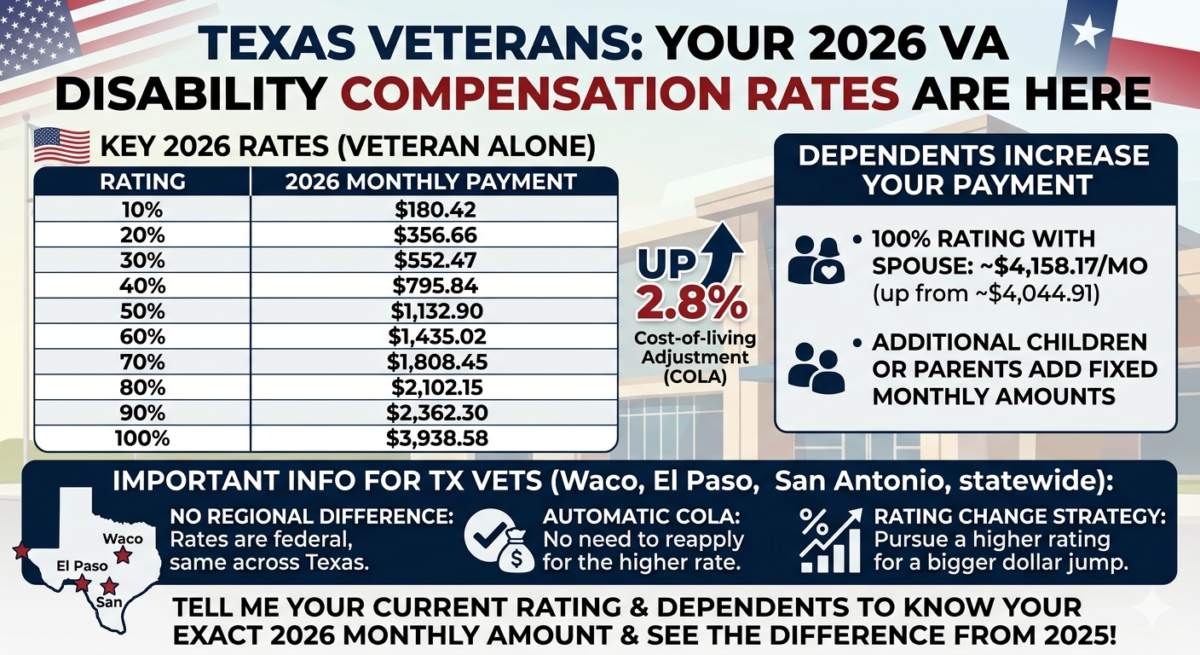
As of December 1, 2025, a notable COLA increase of 2.8% was implemented for veterans receiving VA disability benefits. This adjustment reflects the government’s recognition of inflationary pressures impacting the economic landscape. For veterans in cities such as Waco, El Paso, and San Antonio, this increment can make a significant difference in their monthly financial planning, ultimately contributing to their overall quality of life.

In a broader sense, the COLA is an essential safeguard for veterans, ensuring that their benefits keep pace with rising costs. It is a vital component of the support system aimed at providing continuous, stable financial assistance to those who have served the nation. Understanding the significance of COLA helps both veterans and their families make informed decisions regarding their financial futures.
The Impact of COLA on VA Disability Rates for 2026
The Cost-of-Living Adjustment (COLA) is a crucial factor that affects the actual dollar amounts of VA disability rates for veterans across Texas, including those in Waco, El Paso, and San Antonio. While it is important to note that the disability ratings themselves remain unchanged, the adjustments in the dollar amounts provide significant financial relief to veterans. For 2026, the COLA increase will lead to higher compensation payments, enabling veterans to manage their expenses more effectively in the face of rising living costs.
The 2026 COLA adjustment reflects the government’s efforts to account for inflation and cost increases. This is particularly relevant as many veterans rely on these benefits as a primary source of income. The resultant increase in the financial benefits translates into enhanced purchasing power for veterans, assisting them in covering essential costs such as housing, healthcare, and everyday expenses. By enhancing these benefits, the government acknowledges the sacrifices made by veterans and addresses their ongoing needs in a changing economic landscape.
Understanding the impact of COLA on VA disability rates is vital for veterans as they plan their finances. Although the actual disability rating, which assesses the degree of a veteran’s service-connected disability, remains static, the financial boost from the COLA helps to bridge the gap between fixed incomes and rising costs of living. Texas veterans can expect to see these changes reflected in their benefits, thus reinforcing the importance of staying informed about VA updates and their implications for personal financial planning.
VA Disability Rates Breakdown for 2026
The Department of Veterans Affairs has released the new VA disability rates for 2026, reflecting an increase aimed at providing better support for veterans. This adjustment occurs annually, taking into consideration various economic factors such as inflation.
For 2026, the general increase in compensation among the various disability ratings is approximately 5.9%. This percentage increase applies to most service-connected disability ratings, where veterans can receive compensation based on their level of impairment. For example, veterans rated with a 100% disability will see their monthly compensation rise to approximately $3,809.93, compared to $3,579.00 in 2025.
Here’s a breakdown for the different VA disability ratings in 2026:
- **10% Disability:** In 2026, veterans with a 10% disability rating will receive about $178.50 per month, up from $168.00 in 2025.
- **30% Disability:** For a 30% rating, compensation increases to approximately $508.80, an increase from last year’s rate of $480.00.
- **50% Disability:** Veterans rated at 50% will receive about $1,042.20, up from $985.00.
- **70% Disability:** Those rated 70% can expect their monthly compensation to be around $1,663.30, which is an increase from $1,572.00.
- **100% Disability:** As mentioned, the 100% disability compensation will be approximately $3,809.93.
Veterans residing in Waco, El Paso, and San Antonio will be directly impacted by these changes, as the new rates will provide crucial financial support for those with service-connected disabilities. The adjusted rates align with the VA’s ongoing commitment to improving the quality of life for veterans by ensuring they receive adequate financial assistance.
Regional Focus: Waco and its Veterans
Waco, Texas, is home to a considerable veteran population, many of whom have dedicated their lives to serving the nation. According to recent estimates, approximately 10,000 veterans reside in the area, reflecting a mixture of backgrounds, ages, and military experiences. Understanding the unique challenges faced by these veterans is crucial as we discuss the implications of the new VA disability rates set for 2026.
Veterans in Waco encounter various challenges, including access to healthcare, mental health support, and job placement services. The transition from active duty to civilian life often poses significant hurdles, such as navigating the VA system for disability benefits. With the adjustments to the VA disability rates, many veterans in Waco will find themselves better equipped to cope with these challenges, as the increased financial support can alleviate some of the burdens.
Local organizations play a vital role in assisting Waco veterans. The Central Texas Veterans Health Care System provides essential healthcare services, both physical and mental, to those who have served. In addition, organizations like the Waco VA Clinic and the Veterans Services Office offer resources for navigating benefits and accessing additional support services. These entities strive to create a more accessible network for veterans to receive the care and services they need.
Furthermore, the Waco community is actively engaged in supporting veterans. Numerous outreach programs and non-profit organizations have been established to facilitate job training, housing assistance, and peer support groups. As disability rates increase, these resources can become even more integral to ensuring that veterans not only receive financial support but also find a solid foundation to thrive in civilian life.
Regional Focus: El Paso and its Veterans
El Paso, a vibrant city located on the U.S. border with Mexico, boasts a significant veteran community. The veteran population in El Paso is notably diverse, encompassing individuals from various backgrounds and military branches. The presence of Fort Bliss, one of the largest military installations in the U.S., contributes significantly to the demographic makeup of the region. Many veterans choose to remain in El Paso after service, drawn by the city’s unique culture, strong community ties, and relatively low cost of living.
Despite the favorable aspects of living in El Paso, veterans in the area face specific challenges that can impact their quality of life. Access to healthcare services and resources for mental health support has emerged as a pressing concern. While the local VA clinic provides essential services, demand often exceeds capacity, leading to long wait times for appointments and treatments. This situation may be exacerbated by economic funding fluctuations, which can influence the availability of crucial support systems.
The recent increase in VA disability rates is expected to have a profound effect on the veterans of El Paso. By providing increased financial support for those who are service-connected disabled, the adjustment in rates can alleviate some of the financial burdens faced by veterans. This uplift in benefits is particularly crucial for veterans adjusting to civilian life, many of whom may struggle to find stable employment due to their injuries or health conditions. As the VA implements the new disability rates, it is anticipated that more veterans will have the opportunity to seek the necessary care and regain a sense of normalcy in their lives.
Regional Focus: San Antonio and its Veterans
San Antonio, often regarded as an important hub for military and veteran communities, is home to a diverse population of veterans who have served in various capacities across multiple conflicts. The city’s robust military presence, which includes installations such as Joint Base San Antonio, has fostered a unique culture that significantly impacts the daily lives of its veteran residents. The specific needs of this population can vary widely, encompassing physical and mental health challenges, reintegration into civilian life, and access to education and employment opportunities.
The introduction of new VA disability compensation rates in 2026 is particularly significant for veterans in San Antonio. Many veterans here face challenges rooted in their service, including PTSD, traumatic brain injuries, and chronic health conditions. These new rates aim to address the financial strain experienced by veterans and their families, promoting overall well-being. As the cost of living continues to rise, enhanced disability compensation can help alleviate some of the fiscal burdens that many veterans encounter.
Furthermore, San Antonio boasts a number of organizations dedicated to supporting veterans, offering resources that complement the VA’s offerings. Local initiatives often emphasize mental health care, employment services, and educational resources tailored to meet the specific needs of veterans. With the updated VA disability rates, many veterans may find the ability to access these resources more feasibly, which is vital for their successful transition into civilian life.
The 2026 VA disability rates, therefore, serve as not only a financial adjustment but also a comprehensive effort to improve the quality of life for San Antonio’s veterans, facilitating their access to necessary services while recognizing the sacrifices made for their country. This strategic support is essential as the city continues to honor its commitment to those who have served.
Resources for Texas Veterans
Texas offers a variety of resources aimed at supporting veterans as they navigate their benefits and adapt to changes in VA disability rates. One of the primary sources of help is the local VA offices where veterans can access a range of services, from medical care to financial assistance. In cities like Waco, El Paso, and San Antonio, veterans are encouraged to visit the nearest VA facility to understand their eligibility and apply for benefits.
In addition to local VA offices, several support organizations operate within Texas, dedicated to assisting veterans. Organizations such as the Texas Veterans Commission provide comprehensive resources, including claims assistance, education benefits, and employment services. These organizations often host workshops and informational sessions to help veterans stay informed about their rights and benefits, especially in light of recent updates to disability rates.
Moreover, financial advisory services are crucial for veterans in managing their disability payments effectively. The Veterans Financial Advisory Network is an example of a resource that connects veterans with financial professionals who understand the unique circumstances of military life. These advisors can provide guidance on budgeting, investments, and long-term financial planning, which are essential aspects of adapting to the new VA disability rates.
Veterans looking for assistance can also benefit from community support groups and social networks such as Buddy-to-Buddy, which pairs veterans with peers to offer advice and camaraderie. Through these networks, veterans can share their experiences and seek assistance regarding benefit navigation, which is vital during this transitional period for disability compensation.
Conclusion and Future Outlook for Texas Veterans
As we conclude our discussion on the new VA disability rates for 2026, it is crucial to recognize their significance for veterans residing in Texas, particularly in cities like Waco, El Paso, and San Antonio. These adjustments to disability compensation reflect the Department of Veterans Affairs’ commitment to supporting veterans who have sacrificed so much for our country. The updated rates aim to provide adequate financial assistance, enabling veterans to manage their living expenses more effectively and enhance their quality of life.
The increased benefits are not just a mere adjustment for inflation; they represent an acknowledgment of the ongoing challenges veterans face, including healthcare costs, housing, and other essential needs. As Texas continues to host one of the largest veteran populations in the United States, it is imperative that the VA addresses their unique circumstances by offering comprehensive support through these disability rates.
Looking ahead, veterans can expect continued advocacy for higher compensation rates and expanded benefits as the landscape of veterans’ needs evolves. Legislative efforts and public discussions are anticipated as part of the ongoing discourse surrounding veteran affairs, seeking to ensure military personnel receive the attention and resources they deserve. Furthermore, changes to VA policies and new initiatives may emerge in response to the needs of veterans, including potential improvements in healthcare, education, and job placement assistance.
In summary, Texas veterans should remain informed about these changes and seek assistance in navigating the VA system to explore all available benefits. Staying connected with local veteran organizations and resources will be instrumental in ensuring that they receive the support necessary to thrive. With ongoing commitment at both state and federal levels, the future looks promising for veterans in Texas as they continue to receive comprehensive support tailored to their needs.